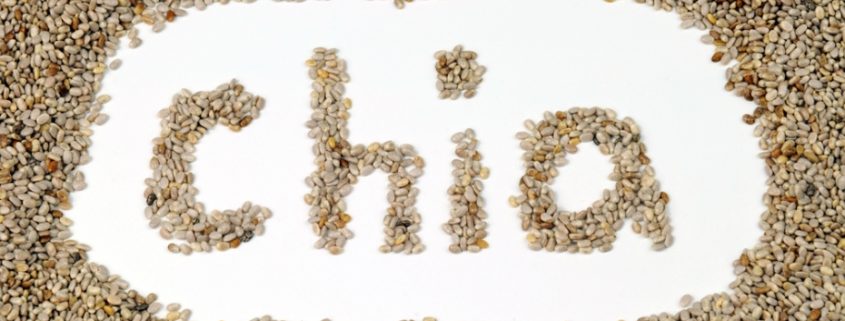
Every day, I sprinkle Chia seeds onto my breakfast.  I also use them in baking, blended into smoothies and in tasty desserts.  These tiny seeds are jam packed with nutritional value and are extremely easy to add to your diet.

Chia, or Salvia hispanica L, is a member of the mint family from Mexico and South America. The Aztecs relied on chia as a staple food and revered it enough to use for religious ceremonies and medicinal purposes.

Rich in omega-3s, high in fibre, protein, magnesium and much more, it is no surprise that chia seeds are known as “the ultimate super food”.

  • Chia is gluten free
  • It is super high in dietary fibre, making it great for digestion and healing digestion issues.
  • It contains 20% Omega 3 ALA, making it a super food for the brain and heart. Chia has eight times more Omega 3 than salmon!
  • It boasts 20% protein
  • It is high in antioxidants
  • Chia contains five times more calcium than milk
  • Chia contains seven times more vitamin C than oranges
  • It contains three times more iron than spinach
  • It contains twice the potassium content of banana
  • It is food for healthy skin, hair and nails
  • It has a positive impact balancing blood glucose levels
  • Chia makes a great egg replacement. Just combine with water to form a gel, and add it to recipes that call for egg.

Here are a few simple ways to use chia seeds:

Blend into smoothies
Add a desert spoon of seeds to any smoothie and as the seeds have a “neutral” taste they mix well with any flavour combination.

Sprinkle onto breakfast cereals and yoghurt
This is my daily favourite and a great way to add nutrients to your first meal of the day.

Add to any baking recipe
Chia seeds can be easily added to any bread or baking recipe including gluten free recipes.  Adding chia seeds increases the nutritional density of the recipe whilst reducing the glycemic index due to the gelatinous outer coating found on chia seeds.  Check out this Oat, Nut and Chia Seed Energy Bar recipe.

Try sprouting with chia seeds
Perhaps something a little different but you can sprout and add to salads.

Make a ‘Chia Fresca”
Mix whole chia seeds with water or fruit juice to make a ‘Chia Fresca’ which translates as ‘fresh chia’.

A tasty (and healthy) Chia dessert
Per serving infuse ½ cup of almond milk with 1 teaspoon honey, vanilla extract and add 3 teaspoons of chia seeds.  Allow the chia seeds to expand, ideally overnight. This pudding is great eaten with fresh seasonal fruit making a tasty, healthy pudding!

YTT

You may be getting a calling to book a Yoga Teacher Training Course.  Maybe you don’t want to be a teacher but you would like the opportunity to explore your practice more deeply or perhaps you would love to teach and are looking for a suitable course.

Here are a few useful steps to help your decision making process.

Set Your Intention

Are you seeking an experience to transform your life and take you overseas to immerse yourself in the training?  This may be an opportunity to step outside of your regular life, travel for your training and add travel adventures to your experience.

You may have a particular yoga style you would love to teach.  Research teacher training offering this particular style and explore the course content.

Studying and building connections in your local community may be your intention.  This is a wonderful way to make new like-minded friends in your community, get to know local teachers and find your roots in a supportive local community.

You may have aspirations to train with a particular teacher that has inspired you and you can seek out where they are hosting teacher training course.

Find out more about the programme

Ensure that you do your research as you are investing into this course and need  to make sure it is right for you.  Ask what lineage the training comes from.  Understand the learning objectives of the course and what skills you will learn.  Seek out testimonials and ask previous students for their feedback.  What does the course structure look like and what does a typical day look like.  Find out the finer detail in terms of course content and topics covered.  Who is teaching on the course and find out more about the teachers.

What is the best structure for you?

This is likely to be decided by your lifestyle, personal circumstances and learning style.  A year-round, one weekend a month structure may suit you if you have family and regular work commitments.  This may suit you if you prefer to learn over an extended time period in order to integrate your learning.  Alternatively you may prefer learning in an intensive format and can find 4-6 weeks in your schedule to attend an intensive course.  There in no right or wrong way here, it is all about personal choice.

Spend time doing your research and consult with others to fully discuss your thoughts.  It is important to remember this is the start of your yoga teacher training journey.  Dive in and fully enjoy the experience but know that it could be the first of many.  Your training needs may vary and develop over time so this is your first step on your journey.

Here are a few hand-picked Yoga Teacher Trainings:

Either I have attended these courses myself, studied with the teachers, know the teachers delivering these courses or have received excellent recommendations from students that have attended.

DEVON

Devon School of Yoga
Devon School of Yoga was established in 1989 and offers a broad and comprehensive Yoga Teacher Training course.  The school has a mix of teachers in the faculty with a broad range of skills and experience.

Sheila Coombes in Kingsbridge
Sheila offers a comprehensive in-depth curriculum with several levels of training available.  You will study asana, pranayama and learn ways of engaging your students through careful class planning.  The group provides the opportunity for discussion around the shared teaching experience.

LONDON

Akhanda Yoga YTT in London/Rishikesh
Yog Sundari offers a unique opportunity to study in the UK over 8 weekends and one week of study in Rishikesh.  This holistic Yoga Teacher Training will give you a strong foundation, a wider understanding of yoga and the opportunity to deepen your practice.

Scaravelli Inspired YTT
Intelligent Yoga Teacher Training is led by Catherine Annis and Tanya Love.  This course has been created to develop knowledgeable, responsive and confident teachers who teach yoga based on a solid understanding of the fundamental workings of the body and an appreciation of its natural intelligence.

OVERSEAS

Yoga Arts in Bali and Australia
Yoga Arts has been dedicated to training Yoga Teachers for over 24 years and is passionate about providing a high standard of teacher training.  Ultimately the objective of the Yoga Arts’ trainings is to train participants in quality, professional, safe and knowledgeable teaching skills and to offer, the teacher to be, as many available teaching tools as possible so that their teaching can be available to everyone. Most importantly, to bring about self responsibility, self understanding, spiritual maturity and awakening to the student.The Yoga Arts’ trainings prepare the student on an inner reflective level to move towards a spiritual maturity and self-understanding.

Akhanda Yoga in Rishikesh
Train in the birthplace of Yoga with Himalayan Master Yogrishi Vishvketu at the uplifting east-meets-west Anand Prakash Yoga Ashram. Let us guide you to become a radiant and inspired holistic yoga teacher!  Akhanda Yoga emphasises a balanced class including a full repertoire of yoga techniques sequenced artfully to align the layers of self.

Frog Lotus Yoga Teacher Training in Spain
The style that is taught at the Frog Lotus Yoga Teacher Training Course in Spain is a joyful, creative and intelligent vinyasa flow style which can be easily adapted to different levels. At the end of the Yoga Teacher Training Spain you will not only be qualified to teach vinyasa flow yoga but will also have the tools to create other styles of yoga classes, such as more basic hatha, prenatal and restorative yoga.

Happy researching and enjoy your yoga journey!

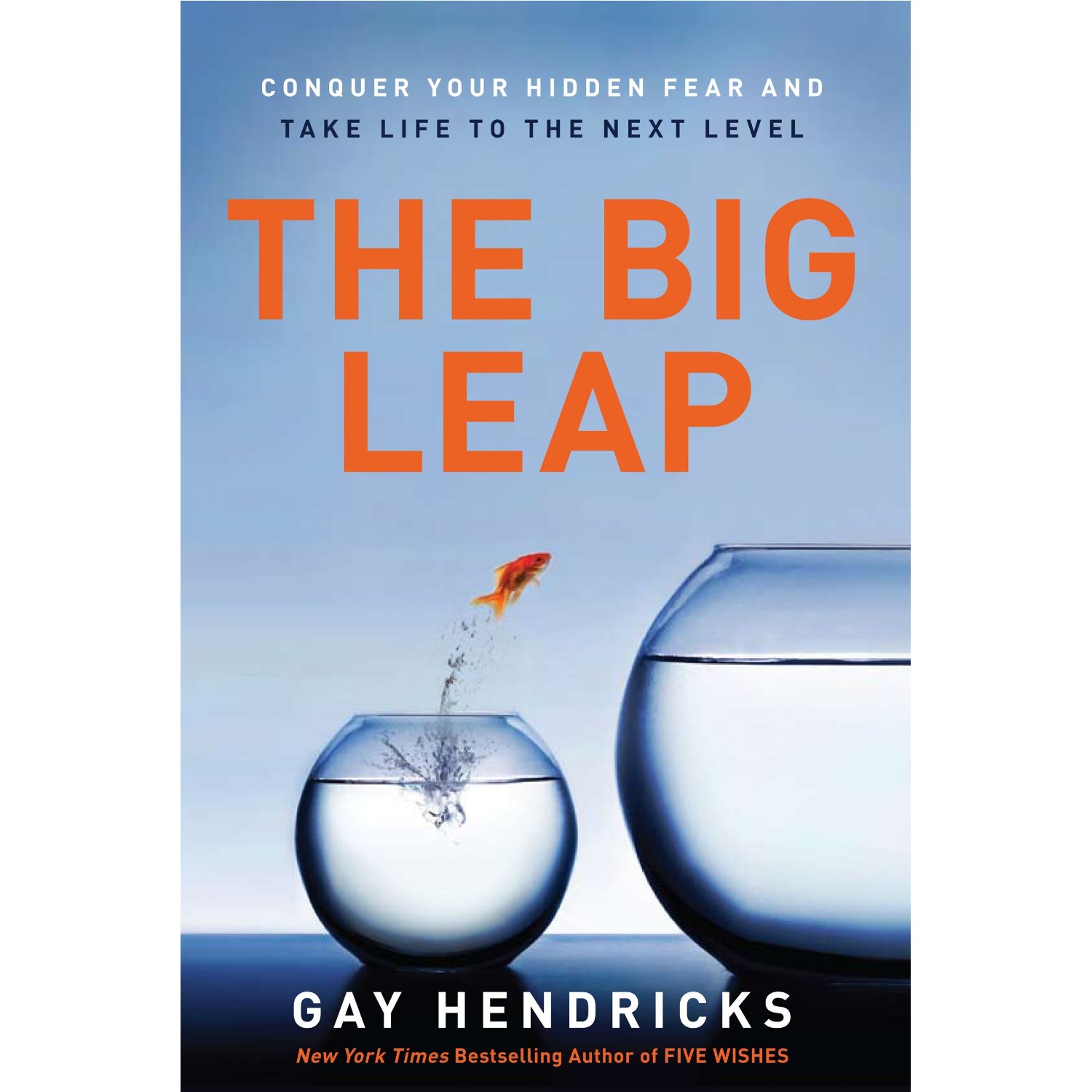
As mentioned last week, my summer has been busy working on my creative project.  Alongside that I have been completing extra yoga study and also focussing on study related to my business.  It was recommended through my business study to read The Big Leap by Gay Hendricks PhD.

I was familiar with Gay’s work and background in psychology, personal growth, abundance and consciousness so I jumped at the chance to read this book.  In fact it was so engaging, I couldn’t put the book down and ended up reading it in two days!

The book is a comprehensive and simple guide to overcoming our barriers to achieving our full potential and to live more fully.  This potential is not just financial but also in love and life.

The goal in life is not to attain some imaginary ideal; it is to find and fully use our own gifts.”

The book can lead to some major “A-Ha” moments in terms of understanding our gifts and how we may be subconsciously sabotaging ourselves so that we don’t move forward to be the best we can be.

We have a limit to how much success, love, joy we may experience in life and generally this can be set early in our childhood.  This limit comes into play when we are doing well and we subconsciously do things to sabotage our achievements such as making bad decisions, engaging in negative thoughts, physically injuring ourselves, creating personal dramas.

Each of us has an inner thermostat setting that determines how much love, success, and creativity we allow ourselves to enjoy.  When we exceed our inner thermostat setting, we will often do something to sabotage ourselves , causing us to drop back into the old, familiar zone where we feel secure.”

Hitting this ceiling is referred to our “Upper Limit Problem”, when we push through our upper limit a voice in our head may say “You can’t possibly feel this good” or “be this happy in love”.  Unconsciously you do something to bring you back to your safe zone, a place where you feel  most comfortable.

Gay talks about our “Zone of Genuis”, a set of activities that are uniquely suited to you and serve your highest purpose in life.  The key thing here is that they are unique to you drawing on your talents and strengths.  This is what we truly LOVE to do, what makes our heart sing.

The fear of being fundamentally flawed brings with it a related fear.  It’s the fear that if you did make a full commitment to living in your Zone of Genius, you might fail.  It’s the belief that even your genius is flawed.”

Gay expertly guides us through the hidden barriers giving advice on how to bust through them.  The four barriers identified are:

  1. Feeling Fundamentally Flawed – A feeling that you are fundamentally flawed in some way.
  2. Disloyalty and Abandonment – Believing that if you achieve success you will end up alone, be disloyal to your roots and leave behind people from your past.
  3. Believing That More Success Brings a Bigger Burden – Believing that reaching your highest potential will make you an even bigger burden.
  4. The Crime of Outshining – Feeling that having full success will make you outshine others which will make them look or feel bad.

I really loved this book and found new ways to look at how I deal with situations.  It gave me the opportunity to really look at how I respond to situations and where I may be sabotaging my life.  I firmly believe that you can change your life from the inside out so this book is a useful tool to examine ourselves and develop ways to change.

I’m sure I will get more out of the book upon further reading.  I’d highly recommend this book if you wish to take a different look at your inner life and would like to make positive change.

I love the mantra Gay quotes “I expand in abundance, success, and love every day, as I inspire those around me to do the same”.  We can each be the change.

the big leap


Here’s another recipe from our Bala Brook Aloha Yoga Retreat 2014.  Christine is a dedicated foodie and gets her inspiration from many sources including professional chefs.  This recipe is one of Jamie Oliver’s.

Minutes to prepare: 20
Minutes to cook:  30
Number of servings: 4

Ingredients:
12 oz chickpeas, soaked overnight in water
1 medium potato, peeled
6 leek, finely, sliced
1 tbsp olive oil
knob of butter
2 cloves of garlic, finely, sliced
salt
freshly ground pepper
850 ml chicken or vegetable stock
2 handful parmesan cheese, grated
extra virgin olive oil

Directions:

  1. Rinse the soaked chickpeas, cover with water, and cook with the potato until tender.
  2. Remove the outer skin of the leeks, slice lengthways from the root up, wash carefully and slice finely.
  3. Warm a thick-bottomed pan, and add the tablespoon of oil and the knob of butter. Add the leeks and garhc to the pan, and sweat gently with a good pinch of salt until tender and sweet.
  4. Add the drained chickpeas and potato and cook for 1 minute. Add about two-thirds of the stock and simmer for 15 minutes.
  5. Purée half the soup in a food processor and leave the other half chunky this gives a lovely smooth comforting feel but also keeps a bit of texture.
  6. Now add enough of the remaining stock to achieve the consistency you like. Check for seasoning, and add Parmesan to taste to round off the flavours.

Source: jamieoliver.com

We are all BIG fans of our Aloha Yoga Retreat cook, Christine.  She creates our retreat menus, sources local ingredients and lovingly prepares our retreat meals.  Her food gives us inspiration and fresh ideas for dishes to make at home.

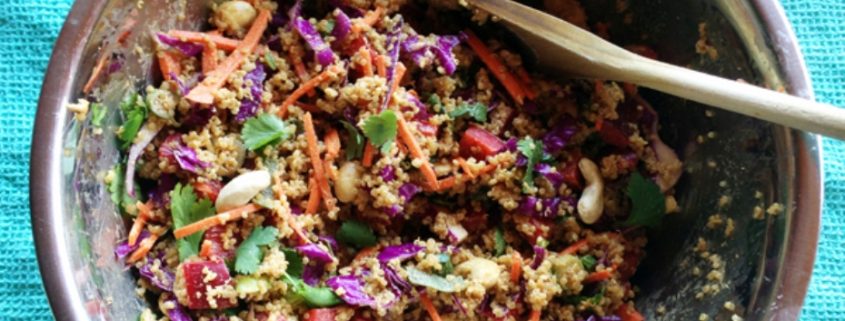
By popular request here is one of her lunchtime dishes.  A tasty salad which is vegan and gluten-free.  You can swap the cashews and cashew butter for peanuts and peanut butter.

And yes Christine will be with us for the Bala Brook 2015 Aloha Yoga Retreat!

Ingredients
1 cup quinoa, rinsed and drained
2 cups finely cut purple cabbage
1 cup shredded carrots
1 red bell pepper (capsicum), diced
2 green onions (scallions), thinly sliced
½ cup chopped fresh coriander
½ cup cashews (or peanuts)

Dressing
¼ cup cashew butter (or peanut/almond butter)
2 cloves garlic, minced
1 tbsp grated fresh ginger (or 1 tsp dried ginger)
3 tbsp tamari (light soy sauce)
2 tbsp agave (or maple syrup)
2 tbsp warm water
1 tbsp rice vinegar
1 tbsp sesame oil
½ tsp crushed red chili pepper (or 1 tsp Sriracha sauce)

Instructions

  1. Place the quinoa along with 2 cups salted water in a medium saucepan. Cover and bring to a boil, then reduce to the lowest heat setting. Simmer until water is completely absorbed and quinoa is fluffy, about 20 minutes.
  2. In a large bowl, whisk the dressing ingredients together.
  3. Add the quinoa to the dressing and mix well to combine.
  4. Add the veggies, onions, cilantro and cashews.

Original source for this recipe:
Author: Angela @ Vegangela.com
Image credit vegangela.com
Adapted from http://www.juliehasson.com/2012/10/peanut-sesame-noodles

Self-care is not selfish or self-indulgent.  We cannot nurture others from a dry well.  We need to take care of our own needs first, then we can give from our surplus, our abundance.” Jennifer Louden

Life can be busy, demanding and stressful.  With ever increasing demands from work, family obligations and life in general, we may feel the consequences of not taking adequate care of our physical, mental or emotional health.  We can end up feeling drained, depleted, stressed and out of control.

For some, self-care may seem like an impossible luxury.  You may be running at a thousand miles an hour, never catching up and the thought of self-care may even seem selfish to you.

Self-care is not a luxury, it is ESSENTIAL.  We cannot operate from an empty vessel so ignore any warning signals from your body, mind and spirit at your own peril.  If we do not take the time to fill up our vessel, we will have far less to offer others including those closest to us.

If self-care is being avoided, your body-mind-spirit will start to flag up this lack.  Initially the signals may be subtle but if ignored, over time, the messages will get louder and louder.  You may experience anger, frustration, fear, impatience, lack of energy, illness or injuries.

The key is to understand when we feel unbalanced and to identify self-care strategies that work for you.  We need to understand what helps to restore and nourish us.  This may be different for each individual but developing your self-awareness can help identify what works for you.

Here’s a list of self-care activities.  See what resonates with you and add anything that makes your heart sing.  We have a deep inner knowing so take the time to connect with your heart to understand what your body, mind and spirit are calling out for.

  1. Eat healthy fresh foods – Plant based foods or those closer to the sun (less processing) will have greater energy and health inducing qualities.  Eating a nutrient packed diet can help you be more productive, reduce stress, ensure that you are healthy and help you to live longer.
  2. Get sufficient sleep each night – The recommendation is 6-8 hours per night and make sure that you switch off devices several hours before bedtime as the artificial blue light affects your circadian rhythms and melatonin levels which can disrupt the quality of sleep.
  3. Take regular exercise – Find something that you really enjoy and commit to it on a regular basis.
  4. Get outside – Sunshine and sunlight are hugely beneficial for our health and wellbeing.  Sunlight can help with the production of Vitamin D which the body can store for about a month.  Regular exposure to sunlight, particularly in the winter months, enables the body to maintain levels of Vitamin D.
  5. Maintain your social networks – Social support and social interaction have a positive influence on our physical and mental health. It helps lower stress, depression, anxiety and also highly affects our endocrine-immune system.  We are social animals so positive social interactions are hugely important.
  6. Laugh! – There’s nothing like a deep-rooted belly laugh.  Laughter is known as the best medicine.  It can help lower blood pressure, reduce stress hormone levels, improve cardiac health and trigger the release of endorphins.  No wonder it feels so good!
  7. Meditate daily – Developing a daily meditation practice can be hugely beneficial.  Your life will become calmer and clearer, it helps to lower blood pressure, helps to reduce stress, your mind becomes clearer, you will be able to achieve more and you will feel amazing!  You may feel that you don’t have the time to meditate but start off with 5 minutes and increase your practice over time.  You will find that extra time will open up for you as you deepen your practice.
  8. Get a massage – A soothing massage can help you unwind.  Massage is known to help with reducing stress, pain and muscle tension.  It’s a perfect way to dedicate some time to yourself in order to replenish and nourish.
  9. Cultivate hobbies – A hobby is an activity that you enjoy.  Hobbies can enhance your well-being and give more meaning to your life.  It’s a chance to connect with ourselves and to explore our creativity.
  10. Develop mindfulness – Mindfulness is developing a moment-to-moment awareness of our experiences without judgment. Mindfulness can help reduce stress, improve focus, decrease emotional reactivity, improve empathy and compassion and promote a better quality of life.

Go ahead and find out which self-care strategies work for you.  These may change over time but make a start.

Here’s a gentle reminder: Take care of yourself today.

Taking good care of YOU, means the people in your life will receive the best of you, rather than what’s left of you.” ~ Carl Bryan, Tennis Coach

Self-care is a divine responsibility” ~ Danielle La Porte

Sign up to my monthly e-newsletter here for updates, events, blog posts and a free monthly meditation download.

Right now I am completely absorbed by “The Great Work of Your Life: A Guide for the Journey to Your True Callingby Stephen Cope, the  Director of the Institute for Extraordinary Living at the Kripalu Center for Yoga and Health.

Stephen takes us on a step by step journey through the ancient spiritual text the “Bhagavad Gita” and makes it relevant for our contemporary lives.  He explores the notion of dharma, the inner possibility within every human soul.

It is a perfect, and easy, read if you are feeling a little lost on your journey, if you are asking bigger questions about your life and you wish to explore your true calling.  It might be that you are living fairly close to your dharma but you need minor adjustments to be fully living your life purpose.  Or perhaps you have been living on purpose for many years and now it just doesn’t feel right, your inner knowing is telling you that changes are needed to live your life more fully at this present time.

Every man has a vocation to be someone: but he must understand clearly that in order to fulfil this vocation he can only be one person: himself.” stated Thomas Merton.  This is so true, we each have a unique calling.  We may get influenced by outside opinions such as those from parents, teachers or peers but it is only when we tap into our true calling do we experience true energy, passion and magic.

If you bring forth what is within you it will save you.  If you do not, it will destroy you.  And what precisely is destroyed? Energy is destroyed first.  Those shining eyes.  And then faith. And then hope. And then life itself.”  I am sure we have all experienced both sides of this coin, when we are fully living our dharma we feel alive, we can feel it in our heart, others can see it in our face and they witness “those shining eyes”.   When we are not living our dharma we may feel heavy, stressed, confused, desperate and unhappy.

I think it is comforting to know that at each phase in life we may have a different calling and sometimes we may have several dharmas running at the same time, for example your calling may be musician, parent and community activist.

What steps can you take to start to explore and live your dharma?

Allow yourself time to reflect and to ask questions such as “Why am I here?”, “What is my purpose?”, “What am I being guided or drawn to do?”

Create quiet time and stillness to let your heart and mind speak to you.

You may get lots of answers but over time your truest answers will begin to develop.

Don’t be frightened to try new things, it doesn’t have to be huge scary life changing stuff but taking action can open the door to your true purpose.

Think of the small as large.   All of our actions, however small or large, are important so do not overrate or underrate your dharma.  You will know when it feels comfortable for you at just the correct balance and size.

Trust in your inner knowing!

The last five months have been an immersion into self study and absorbing as many spiritual books as I possibly can.  My reading list seems to be getting longer by the day and at times I find I have up to five books on the go!

The catalyst for this time of such dense reading was “The Path of Practice” by Bri Maya Tiwari.  My roommate at the Anand Prakash Ashram recommended it so I headed off to one of the many bookstores on the banks of the Ganges in Rishikesh to purchase a copy.  It is probably the best 295 rupees I have ever spent!

This is one of the simplest introductions to a step-by-step practice of sadhana for the uninitiated…. Her methods incorporate the healing nature of sound, food and breath and are easy to understand and follow to be in tune with natural rhythms.” – Book Reviews

The Path of Practice” is an honest sharing of Maya’s experience of healing from her diagnosis of ovarian cancer at the age of 23 to her journey using Vedic healing practices.  She undertook to heal herself through meditation, the healing of her ancestral heritage, sound healing, silence, creating sacred space, breathwork and food sadhana.  This was a deep process taking Maya from America to Rishikesh where she became a practising Vedic monk devoted to developing and sharing her knowledge of healing techniques.

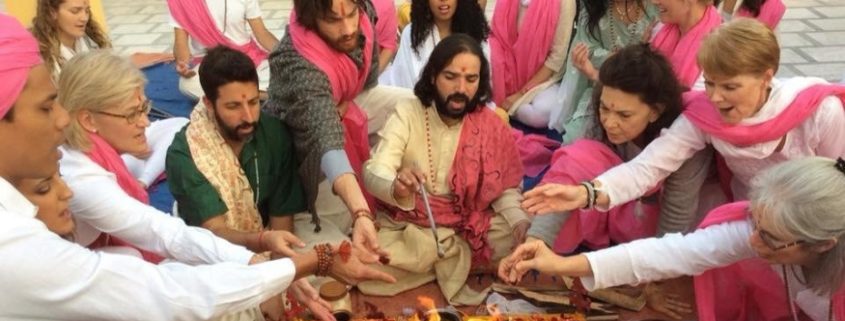
The book is an easy to follow, step by step guide which is part auto-biography and part healing manual.  For me the book gave me many “aha” moments, enabling me to journey deeper into my yoga practice, understand some of the practices that I was intuitively being drawn to.  We were practicing many of the sadhanas at the Ashram so it was useful to be practicing as well as intellectually understanding the processes.  Our sadhanas included full moon ceremonies to bask in the essence of the moon to heal shakti prana (feminine energies), holding ancestor ceremonies on the banks of the river Ganges, attending fire puja (rituals) to burn away impurities, chanting for healing and eating a sattvic (pure) diet.

We are wellness. We are consciousness. That is our natural state. Disease is an impostor” – Bri Maya Tiwari

This book is designed for women by a woman but it does not preclude men.  Maya states that this book is a “course in healing and in living.”  She maintains that “all pain is a reminder that we have strayed from the natural rhythms of life,” and this book acts to guide us back.  An easy to follow programme containing a wealth of knowledge and the depth of experience.  It’s a profound read and calls us to get in tune with deeper universal rhythms.

Huna philosophy and the changed outlook on life can help individuals achieve closer and more loving personal relationships, both at home and at work. Dramatic improvements occur in all areas of life.

The state of your mind affects your emotions and Huna can free locked up memories and emotional states. You become capable of successfully treating harmful addictions, insomnia, migraine and depression, as well as breaking destructive habits as you learn a healthier, happier and more harmonious way of living your life.

The spiritual essence of the Huna philosophy is that all power comes from within. Huna teaches us to listen to our inner self, to develop intuition and to balance your seven energy centres or chakras through meditation, breathwork and healing.

the seven principles of huna

ike : be aware

The world is what you think it is

kala : be creative

There is no limits

makia : be focused

Energy flows where attention goes

manawa : be here

Now is the moment of power

aloha : be happy

To love is to be happy with

mana : be confident

All power comes from within

pono: be positive

Effectiveness is the measure of truth

Book Review

The wilderness is an untamed, unpredictable place of solitude and searching. It is a place as dangerous as it is breathtaking, a place as sought after as it is feared. But it turns out to be the place of true belonging, and it’s the bravest and most sacred place you will ever stand.’ ~ Brené Brown, PhD, LMSW

Winter is the perfect time to retreat from the world and to spend time reading.  I’m working my way through books that have been on my wish list for ages.

I am currently reading Braving The Wilderness by Brené Brown and I’m having quite a few ah-ha moments.  This book is helping me make sense of some of the thoughts and ideas I have been developing and also sheds new light on the current global conversations.

I have been questioning and reviewing my ideas, releasing what no longer holds true for me or is no longer required.  Ultimately I realise that I am (re)discovering my true self.  This process can be confusing and sometimes messy but inner knowing is guiding this transition.

‘True belonging doesn’t require us to change who we are. It requires us to be who we are.’ ~ Brené Brown

This book is a mix of research, storytelling and honesty to encourage wider conversations.  Social scientist Brené Brown starts the discussion about the experiences that bring meaning to our lives – experiences of courage, vulnerability, love, belonging, shame and empathy.

Brown believes we are experiencing a spiritual crisis of disconnection.  In the book she offers us the clarity and courage we need to find our way back to ourselves and each other.

Brené writes, ‘True belonging requires us to believe in and belong to ourselves so fully that we can find sacredness both in both being a part of something, and in standing alone when necessary. But in a culture that’s rife with perfectionism and pleasing, and with the erosion of civility, it’s easy to stay quiet, hide in our ideological bunkers, or fit in rather than show up as our true selves and brave the wilderness of uncertainty and criticism. But true belonging is not something we negotiate or accomplish with others; it’s a daily practice that demands integrity and authenticity. It’s a personal commitment that we carry in our hearts.

One of the main issues identified through her research was the feeling of being ‘spiritually disconnected,’ a diminishing sense of shared humanity. What seems to bind us together now is shared fear and disdain, not common humanity, shared trust, respect or love. Emerging from the responses in her research, Brown describes four elements as ‘true belonging.’

1. People Are Hard to Hate Close Up. Move In.
2. Speak Truth to BS. Be Civil.
3. Hold Hands. With Strangers.
4. Strong Back. Soft Front. Wild Heart.

I found this a powerful and inspiring book.  It unpacks our contemporary ways of being and the disconnect that is experienced on a global & personal level.  This book seems to connect with our desire to be our true self even if our true self has been deeply buried during our journey through life.  We can experience trauma, upsetting events, get stuck in life situations or end up completely lost but our deeper knowing will continue to give us messages to guide us back on track.  Our inner wisdom pushes us towards finding our true self again.

We have a collective and individual desire to belong.  It is what makes us human.  Brown writes “We are wired for connection. But the key is that, in any given moment of it, it has to be real.

Braving The Wilderness encourages us to build courage, resilience, review ourselves, move in, be civil, be our true self and to find our true voice.

Watch Brené Brown discuss Braving The Wilderness with Marie Forleo.  “How to Brave The Wilderness” with a particular focus on some powerful truths about belonging, courage, and why we all desperately need to change the way we talk about our enemies.

Also watch Brené Brown’s inspirational TED talk “The power of vulnerability”.  One of the most watched TED talks with 40 million views to date (TED website & YouTube views).  Brené Brown studies human connection – our ability to empathise, belong, love. In a poignant, funny talk at TED, she shares a deep insight from her research, one that sent her on a personal quest to know herself as well as to understand humanity.